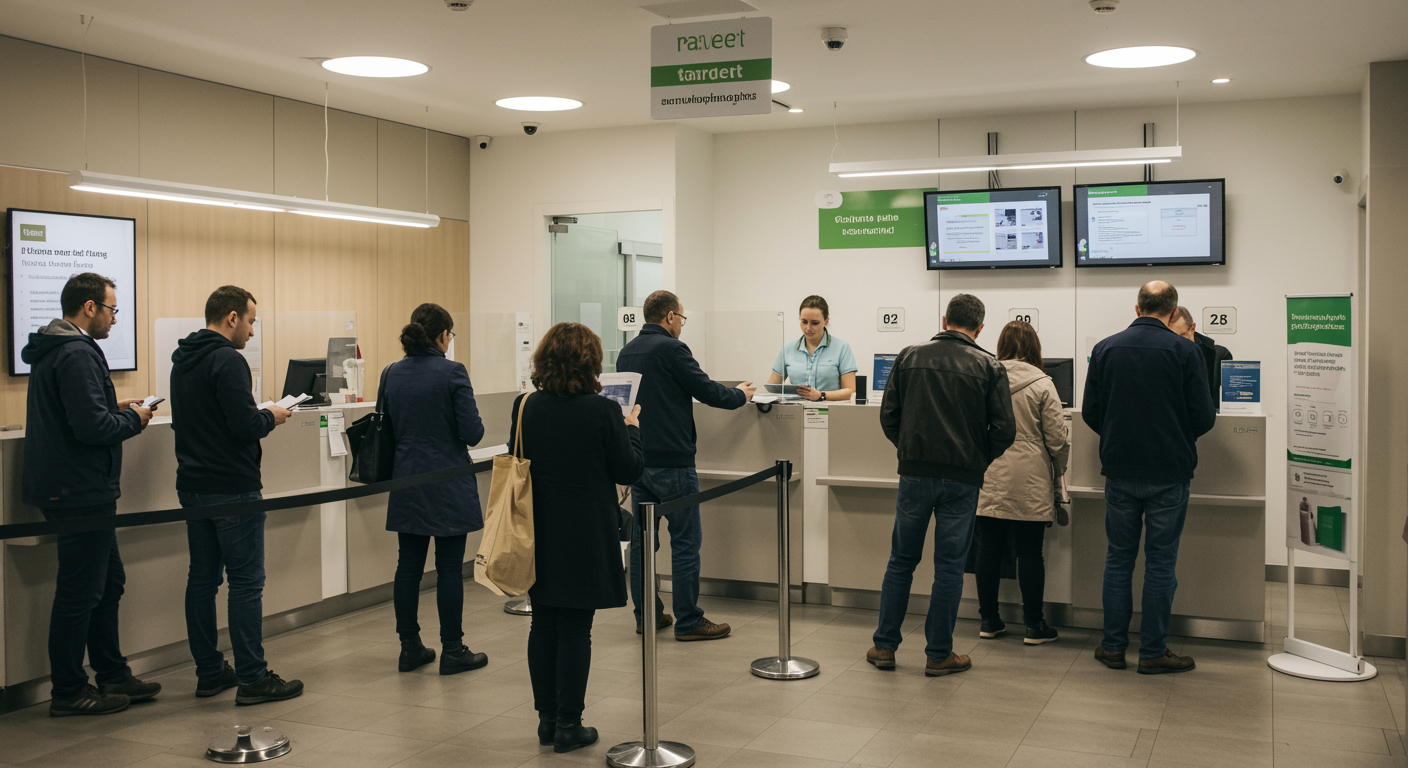
India’s payment landscape represents a unique dual economy where traditional cash transactions coexist with rapidly advancing digital payment systems. From bustling bank branches in tier-2 cities to UPI transactions processed through smartphones in metropolitan areas, the country manages millions of payout requests daily across multiple channels. This complex ecosystem creates distinct challenges during peak usage periods when demand far exceeds system capacity.
Payout queues intensify during busy hours due to several converging factors including salary disbursement cycles, festival seasons, and daily transaction spikes that overwhelm both physical and digital infrastructure. Recent NPCI regulations and UPI rule changes have introduced new dynamics to queue management, implementing throttling mechanisms and response time mandates that aim to balance system stability with user convenience. These reforms address longstanding issues of cash shortages at ATMs and transaction processing delays while introducing compliance requirements that reshape how financial institutions handle peak-hour congestion.
What Are Payout Queues? Types and Causes in India
Payout queues in India encompass both digital waiting periods for electronic transactions and physical lines at banks and ATMs where customers wait to access their funds. Digital queues manifest as processing delays in UPI, NEFT, RTGS, and IMPS transactions, while physical queues form at bank branches, ATM machines, and cash withdrawal points during high-demand periods.
The nature of these queues varies significantly based on system architecture, regulatory constraints, and infrastructure limitations. Digital payment systems experience queues when transaction volumes exceed processing capacity, leading to timeout errors and retry mechanisms. Physical queues develop due to cash shortages, limited ATM availability, and concentrated banking hours in smaller towns.
System overload during peak hours creates cascading effects across multiple payment channels. When UPI systems face congestion, users often switch to alternative methods like bank visits, intensifying physical queues. Policy changes and regulatory compliance requirements further influence queue dynamics by imposing transaction limits and processing restrictions during specific time windows.
Understanding queue patterns requires examining both immediate triggers like salary payments and underlying structural issues including uneven infrastructure distribution and varying digital adoption rates across different regions of India.
| Queue Type | Location/Channel | Typical Causes | Peak-Time Triggers |
|---|---|---|---|
| Digital Processing Queue | UPI Apps, NEFT, RTGS | Server overload, API limits | 9-11 AM, 6-8 PM transactions |
| ATM Cash Queue | Bank ATMs, White Label ATMs | Cash shortages, machine downtime | Salary days, festival periods |
| Bank Branch Queue | Public/Private Bank Branches | Limited counters, complex transactions | Month-end, pension disbursement |
| Mobile Banking Queue | Bank Mobile Apps | Network congestion, app limitations | Business hours, promotional events |
| Wallet Transfer Queue | Paytm, PhonePe, Amazon Pay | KYC verification, compliance checks | Cashback campaigns, festival sales |
How India’s Payment Channel Mix Influences Queue Dynamics
India’s diverse payment ecosystem creates interconnected queue patterns where congestion in one channel directly impacts others. The coexistence of cash-dependent rural areas with digitally advanced urban centers means that queue dynamics vary significantly based on geographic location and user demographics. When digital systems face overload, users often revert to traditional banking methods, creating ripple effects across the entire payment infrastructure.
The preference for specific payment methods during different times of day contributes to predictable queue patterns. UPI transactions peak during business hours and evening shopping periods, while ATM queues typically form during early morning and late evening hours when bank branches remain closed. This temporal distribution helps explain why certain payment channels experience more severe congestion during specific time windows.
Regional variations in digital adoption rates further complicate queue management strategies. Metropolitan areas with high smartphone penetration may experience primarily digital queues, while smaller towns still rely heavily on physical banking infrastructure. Payment service providers must account for these varying usage patterns when designing capacity management systems and queue mitigation strategies.
Historical Perspective: Queue Challenges in Indian Banking
Demonetization in 2016 created unprecedented queue challenges across India’s banking system, with millions of people simultaneously attempting to exchange old currency notes and access digital payment alternatives. This event highlighted the fragility of existing infrastructure and accelerated the adoption of digital payment methods, fundamentally changing how Indians interact with financial services.
The rollout of major technology initiatives like the Unified Payments Interface and Aadhaar-enabled payment systems initially created new queue bottlenecks as users adapted to unfamiliar processes. Early UPI implementations faced frequent downtime during peak hours, leading to user frustration and temporary reversions to cash-based transactions that overwhelmed physical banking locations.
Peak Hours: When and Why Payout Queues Worsen
Peak-hour queue formation follows predictable patterns driven by salary disbursement cycles, daily commerce rhythms, and regulatory timing constraints. Understanding these patterns enables users and service providers to anticipate congestion and implement appropriate mitigation strategies.
The severity of peak-hour queues depends on multiple overlapping factors including transaction volume spikes, system capacity limitations, and compliance-related processing delays. Regulatory windows for certain transaction types create artificial bottlenecks that concentrate demand within specific time periods, exacerbating queue formation.
Seasonal variations significantly impact queue intensity, with festival periods and month-end salary cycles creating particularly challenging conditions. These predictable spikes often overwhelm even well-designed systems, requiring dynamic capacity scaling and alternative channel promotion to manage user demand effectively.
- Salary Credit Processing – Monthly and bi-weekly salary disbursements create massive simultaneous payout requests that overwhelm banking systems between 9-11 AM on designated dates, triggering cascading delays across all payment channels.
- Evening Commerce Rush – Peak shopping hours from 6-8 PM generate concentrated UPI and digital wallet usage that exceeds normal processing capacity, particularly during promotional events and festival seasons.
- Regulatory Processing Windows – NEFT and RTGS systems operate within specific hourly batches, creating artificial queue formation as transactions accumulate before processing cutoff times throughout the day.
- ATM Cash Replenishment Cycles – Limited cash loading schedules during early morning hours create afternoon and evening shortages that force users into physical bank queues for withdrawal services.
- Month-End Financial Activities – Concentrated bill payments, EMI deductions, and investment transactions during final week of each month strain system resources and extend processing times across all channels.
Regional and Urban-Rural Variations in Peak Queue Times
Urban areas experience distinct peak queue patterns aligned with corporate working hours, with maximum digital transaction volumes occurring during lunch breaks and post-work shopping periods. Metropolitan cities see concentrated UPI usage between 12-2 PM and 6-8 PM, while ATM queues typically form during early morning hours before office schedules begin.
Rural regions follow different queue timing patterns influenced by agricultural cycles, government payment schedules, and limited banking infrastructure availability. Peak physical queues in smaller towns often coincide with weekly market days and monthly pension disbursement dates, creating severe congestion at the few available banking outlets.
Tier-2 and tier-3 cities represent a hybrid model where digital adoption coexists with traditional banking preferences, leading to dual peak periods that strain both physical and digital infrastructure simultaneously. These areas often experience the most severe queue challenges as they lack the redundant infrastructure of metropolitan areas while facing higher demand than purely rural locations.
Recent NPCI Rules: UPI Queue Management and Restrictions
The National Payments Corporation of India has implemented comprehensive rule changes to manage UPI queue congestion and improve system reliability during peak usage periods. These regulations introduce transaction throttling mechanisms, response time mandates, and compliance requirements that fundamentally alter how payment service providers handle high-volume periods.
New restrictions target specific pain points in the UPI ecosystem, including timeout management, retry logic optimization, and peak-hour load distribution. Banks and payment apps must now adhere to stricter performance standards while implementing queue management features that provide better user visibility into transaction status and expected processing times.
The regulatory framework balances consumer protection with system stability by establishing clear penalties for non-compliance while providing flexibility for innovation in queue management technologies. These changes represent a significant shift toward proactive congestion management rather than reactive problem-solving approaches.
Implementation timelines for various rules create transitional periods where different service providers operate under varying compliance requirements, potentially creating temporary disparities in queue management effectiveness across different UPI applications and banking platforms.
| New Rule | Applies To | Time/Limit | Purpose/Effect |
|---|---|---|---|
| Response Time Mandate | All UPI Apps & Banks | 5 seconds maximum | Reduce user waiting uncertainty |
| Transaction Throttling | Payment Service Providers | Peak hour limits vary | Prevent system overload |
| AutoPay Restrictions | Recurring Payments | ₹5,000 daily cap | Consumer protection, fraud prevention |
| Status Check Requirements | All Digital Payments | Real-time availability | Improve transaction visibility |
| Retry Logic Standards | UPI Applications | 3 attempts maximum | Prevent system abuse |
| Queue Position Display | Banking Apps | Mandatory implementation | User experience improvement |
How Restrictions Change Real-World Payout Queue Experience
New NPCI restrictions create immediate user benefits through improved transaction predictability and reduced timeout uncertainty, but they also introduce new friction points that can extend overall processing times during peak periods. Users now receive clearer status updates about queue position and expected wait times, enabling better decision-making about when to initiate transactions.
The implementation of transaction throttling means that some users experience delayed processing during busy hours, but the overall system stability improvements reduce the likelihood of complete transaction failures that previously required manual intervention. This trade-off between individual transaction speed and system-wide reliability represents a fundamental shift in how digital payment queues operate.
Response time mandates force payment providers to invest in infrastructure improvements and queue management systems, ultimately benefiting users through more consistent service delivery. However, some smaller service providers struggle to meet these requirements, potentially reducing competition in certain market segments and concentrating queue management capabilities among larger players.
Penalties and Compliance: Bank & App Responsibilities
- Service Level Agreement Violations – Banks face monetary penalties for failing to meet response time requirements, with fines escalating based on the frequency and duration of non-compliance incidents.
- Queue Transparency Requirements – Payment apps must provide real-time queue status information to users, including estimated wait times and alternative payment method suggestions during peak congestion periods.
- System Capacity Planning – Financial institutions are required to demonstrate adequate infrastructure scaling capabilities and must submit capacity management plans for regulatory approval during high-demand seasons.
- Customer Communication Standards – Banks and apps must notify users about expected delays exceeding 30 seconds and provide clear guidance on transaction status checking procedures and alternative payment options.
Physical Payout Queues: Banks and ATMs Under Strain
Physical payout queues at banks and ATMs continue to represent significant challenges despite India’s digital payment revolution, particularly in smaller cities and rural areas where cash remains the primary transaction medium. These queues intensify during salary disbursement periods, government payment schedules, and cash shortage events that force digital users back to physical withdrawal methods.
ATM networks face ongoing strain due to irregular cash replenishment schedules, machine downtime, and concentrated usage patterns that exceed individual machine capacity limits. Banks struggle to balance operational costs with service availability, often resulting in insufficient ATM density in high-demand areas and extended wait times during peak usage periods.
Branch banking queues persist due to complex transactions that cannot be completed through digital channels, elderly customers preferring in-person service, and trust issues that keep some users away from digital alternatives. Managing these physical queues requires different strategies than digital queue management, focusing on infrastructure expansion, staff optimization, and service process improvements.
- Time Your Visits Strategically – Avoid month-end dates, salary disbursement days, and morning hours when queues are typically longest; mid-week afternoons often offer shorter wait times.
- Use ATM Locator Apps – Check real-time ATM availability and cash status through bank mobile apps or third-party services before traveling to avoid non-functional machines.
- Leverage Bank-Specific ATMs – Use your own bank’s ATMs when possible to avoid additional transaction fees and typically experience faster processing with better cash availability.
- Consider White Label ATMs – Explore non-bank ATM networks during peak hours as they may have shorter queues, though transaction fees might be higher than bank-operated machines.
- Plan for Multiple Locations – Identify 2-3 nearby ATM or bank branch alternatives before urgent cash needs arise, particularly in areas with limited banking infrastructure.
- Utilize Off-Peak Hours – Early morning (7-9 AM) and late evening (8-10 PM) often have shorter queues at bank branches, though ATM availability may be better during these times.
Major Events Shaping Physical Payout Queues (e.g., Demonetisation)
Demonetization in November 2016 created the most severe physical payout queue crisis in India’s banking history, with millions of people simultaneously attempting to exchange old currency notes and access their funds through overwhelmed bank branches and ATM networks. Queue wait times extended to several hours, and some ATMs remained empty for days due to cash shortage and logistical challenges in currency distribution.
The COVID-19 pandemic introduced new queue management challenges as social distancing requirements reduced bank branch capacity while digital payment adoption accelerated, creating temporary spikes in ATM usage for essential cash needs. Banks implemented appointment systems and digital queue management tools, fundamentally changing how physical queues operate in the post-pandemic era.
Natural disasters and regional emergencies continue to create localized queue crises when digital payment infrastructure fails and communities revert to cash-based transactions. These events highlight the ongoing importance of physical banking infrastructure as a backup system, even in an increasingly digital economy, and demonstrate the need for resilient queue management strategies that can handle sudden demand spikes.
Digital Queues: UPI and Online Payout Bottlenecks
Digital payment queues manifest as processing delays, timeout errors, and status uncertainty that frustrate users during peak transaction periods. UPI systems face particular strain during high-volume events like festival shopping, salary credit processing, and promotional campaigns that generate transaction volumes exceeding normal system capacity.
API limitations and backend processing bottlenecks create cascading delays that affect multiple payment channels simultaneously. When primary UPI rails experience congestion, alternative pathways like IMPS and NEFT may also face increased load as users attempt to complete transactions through different channels, creating system-wide queue formation.
The complexity of digital payment queues extends beyond simple volume management to include fraud detection processing, compliance checks, and inter-bank settlement procedures that introduce additional delay factors. Modern queue management systems must balance security requirements with user experience expectations while maintaining system stability during peak demand periods.
Response time variations across different UPI applications and banking platforms create inconsistent user experiences during peak hours. Some providers invest heavily in infrastructure scaling and queue optimization, while others struggle with legacy systems that cannot handle modern transaction volumes effectively.
| Bottleneck Type | Common Cause | Peak Risk Period | Mitigation (2025 Rules) |
|---|---|---|---|
| API Response Delays | Server overload, network congestion | 9-11 AM, 6-8 PM daily | 5-second response mandate |
| Transaction Status Limbo | Inter-bank communication delays | Month-end settlement periods | Real-time status updates |
| Retry Loop Failures | Multiple failed attempts | High-traffic promotional events | 3-attempt maximum limit |
| Queue Position Uncertainty | Lack of user visibility | All peak usage times | Mandatory position display |
| AutoPay Processing Jams | Bulk recurring payment loads | 1st-5th of each month | ₹5,000 daily cap implementation |
Timeouts and Retries: How UPI Handles Congestion
UPI systems implement sophisticated timeout and retry mechanisms to manage congestion while maintaining transaction integrity during peak usage periods. The process begins with initial transaction submission followed by systematic retry attempts when primary processing fails due to system overload or network issues.
When congestion occurs, the system implements progressive timeout intervals that increase with each retry attempt to prevent overwhelming already strained infrastructure. This approach balances user experience with system stability by providing reasonable completion opportunities while avoiding recursive congestion that could crash the entire network.
- Initial Transaction Submission – User initiates payment through UPI app, which sends request to NPCI switching system for processing and routing to destination bank.
- Primary Processing Attempt – NPCI attempts immediate transaction processing; if successful, confirmation sent to both parties; if congested, transaction enters retry queue with initial 30-second timeout.
- Automated Retry Sequence – System automatically attempts transaction processing up to 3 times with increasing timeout intervals (30s, 60s, 120s) before marking as failed.
- Status Update Communication – Throughout retry process, both sender and receiver apps receive status updates indicating processing state, estimated completion time, and queue position when available.
Impact of Faster Response Times (2025 NPCI Updates)
The new 5-second response time mandate fundamentally changes user expectations and system architecture requirements for UPI payments. Payment providers must now deliver definitive transaction status within this window, eliminating the uncertainty that previously characterized peak-hour transactions and reducing user anxiety about payment completion.
These faster response requirements drive significant infrastructure investments as payment providers upgrade servers, optimize database queries, and implement more efficient queue management algorithms. The mandate creates competitive advantages for technically sophisticated providers while potentially forcing smaller players to consolidate or exit the market due to compliance costs.
User Behaviors and Payout Queue Strategies
Smart users adapt their payment behaviors to minimize queue-related delays by timing transactions strategically, utilizing multiple payment channels, and leveraging technology tools that provide real-time system status information. Understanding peak usage patterns enables individuals to avoid the worst congestion periods and complete transactions more efficiently.
Diversification across payment methods provides resilience during peak queue periods, allowing users to switch between UPI, mobile banking, and physical cash withdrawal based on real-time availability. Proactive users maintain accounts across multiple banks and payment platforms to maximize their options during system congestion events.
The adoption of queue monitoring applications and bank alert systems helps users make informed decisions about when and how to initiate transactions. These tools provide valuable insights into expected wait times, alternative payment channel availability, and optimal transaction timing based on historical usage patterns.
- Off-Peak Transaction Timing – Schedule non-urgent payments during low-traffic hours (2-4 PM, after 9 PM) to avoid peak congestion periods and ensure faster processing times.
- Multi-App Strategy – Maintain active accounts on 3-4 different UPI apps and digital wallets to provide alternatives when primary payment methods experience congestion or downtime.
- Queue Status Monitoring – Use bank mobile apps and third-party services that provide real-time system status updates and estimated wait times before initiating transactions.
- Pre-Plan High-Value Transactions – Complete large or time-sensitive payments during off-peak hours and avoid month-end, salary days, or promotional periods when queue delays are most likely.
- Cash Reserve Management – Maintain emergency cash reserves to avoid forced ATM or bank visits during peak queue periods when urgent payment needs arise.
- Alternative Channel Preparation – Identify nearby bank branches, ATMs, and digital payment acceptance points as backup options when primary payment methods face extended delays.
Role of Third-Party Services: Standing in Queue for a Fee
Professional queue waiting services have emerged in major metropolitan areas, offering to stand in bank lines or handle cash withdrawal tasks for busy professionals during peak congestion periods. These services charge fees ranging from ₹50-200 depending on wait time expectations and transaction complexity, providing a market-based solution to queue management challenges.
Digital queue management platforms connect users with service providers who can handle routine banking tasks, ATM withdrawals, and document submission requirements that traditionally required personal presence. These services demonstrate how market innovation addresses infrastructure limitations through human resource optimization rather than technology solutions alone.
| Service Type | Average Fee | Where Available | Service Limitations |
|---|---|---|---|
| Bank Queue Standing | ₹100-200 | Delhi, Mumbai, Bangalore | Limited to basic transactions |
| ATM Cash Withdrawal | ₹50-100 | Major metro areas | Requires PIN sharing risks |
| Document Submission | ₹150-300 | Tier-1 cities | Identity verification needed |
Digital Tools and Alerts to Reduce Waiting
Modern banking and payment applications increasingly incorporate queue prediction algorithms and system status alerts that help users avoid peak congestion periods. These tools analyze historical transaction patterns, current system load, and user location data to provide personalized recommendations about optimal payment timing and channel selection.
Push notification systems alert users about favorable transaction conditions, ATM cash availability, and reduced queue wait times at nearby banking locations. Smart scheduling features allow users to set up automatic payments during off-peak hours, reducing their exposure to queue delays while ensuring timely transaction completion.
Systemic Solutions and Future Outlook for Payout Queues
Comprehensive solutions to India’s payout queue challenges require coordinated efforts across infrastructure development, regulatory framework optimization, and technology innovation. Banks and payment providers are investing in distributed architecture, cloud-based scaling, and artificial intelligence-powered queue management systems that can anticipate and respond to demand spikes more effectively.
The integration of predictive analytics and machine learning enables proactive queue management that redistributes transaction loads across multiple processing channels before congestion occurs. These systems analyze historical patterns, real-time demand indicators, and external factors like payroll schedules to optimize resource allocation and minimize user wait times.
Regulatory initiatives focus on establishing industry-wide standards for queue transparency, response time requirements, and system capacity planning. The NPCI continues to refine UPI architecture and introduce new features designed to handle India’s growing digital payment volumes while maintaining service quality during peak demand periods.
Long-term infrastructure development includes expanding banking access points, improving network connectivity in underserved areas, and creating redundant processing capabilities that can handle sudden demand spikes without degrading service quality. These investments require significant capital commitments but promise to resolve many current queue management challenges.
Emerging technologies like blockchain-based settlements, quantum computing for transaction processing, and IoT-enabled cash management systems offer potential solutions to current bottlenecks, though implementation timelines extend well into the next decade.
| Solution | Pros | Cons | Readiness (2025-2030) |
|---|---|---|---|
| AI-Powered Load Balancing | Predictive congestion management | High implementation costs | 2026-2027 |
| Distributed Banking Infrastructure | Reduced single points of failure | Complex coordination requirements | 2025-2026 |
| Real-Time Queue Visibility | Better user decision making | Privacy and security concerns | 2025 (Already rolling out) |
| Blockchain Settlement Networks | Faster inter-bank processing | Regulatory uncertainty | 2028-2030 |
| Dynamic ATM Cash Optimization | Reduced cash shortage queues | Increased operational complexity | 2025-2026 |
What Needs to Change? Stakeholder Perspectives
Banking institutions advocate for regulatory flexibility in queue management approaches while requesting government support for infrastructure investments that can handle India’s rapidly growing digital payment volumes. They emphasize the need for standardized queue metrics and inter-bank coordination protocols that can optimize resource sharing during peak demand periods.
Consumer advocacy groups push for mandatory queue transparency, compensation for excessive delays, and alternative service guarantees when primary payment channels face extended outages. They argue for stronger service level commitments and regulatory penalties that incentivize proactive queue management rather than reactive problem-solving approaches.
- Infrastructure Investment Incentives – Government tax breaks and subsidies for banks investing in queue management technology and additional service points in underserved areas.
- Inter-Bank Resource Sharing – Protocols allowing temporary load balancing between different banking networks during peak congestion periods to optimize overall system capacity utilization.
- Standardized Queue Metrics – Industry-wide measurement standards for queue performance that enable accurate comparison and accountability across different service providers and geographic regions.
- Consumer Compensation Frameworks – Mandatory refunds or service credits when queue delays exceed established thresholds, creating financial incentives for service quality improvements.
- Rural Infrastructure Priority Programs – Dedicated funding streams for expanding banking access points and digital payment infrastructure in underserved areas where queue problems are most severe.
Key Takeaways: Navigating Payout Queues in India Today
Successfully managing payout queue challenges requires understanding the complex interplay between digital and physical payment systems, timing strategic transactions during off-peak hours, and maintaining multiple payment channel options for resilience during congestion periods. Users who adapt their behaviors based on queue patterns and leverage available technology tools experience significantly fewer delays and frustrations.
The regulatory landscape continues evolving with new NPCI rules and compliance requirements that improve transparency and system reliability, though implementation timelines create temporary disparities in service quality across different providers. Future improvements focus on predictive queue management, infrastructure scaling, and user experience enhancements that should reduce wait times and improve payment reliability by 2026-2027.
Regional variations in queue dynamics mean that optimal strategies differ significantly between urban and rural areas, requiring localized approaches to payment method selection and timing. Understanding these geographic differences enables more effective queue avoidance and ensures access to funds when needed regardless of location or infrastructure limitations.
- Strategic Timing Advantage – Avoid peak hours (9-11 AM, 6-8 PM), month-end dates, and salary disbursement periods to reduce queue exposure and ensure faster transaction processing.
- Multi-Channel Resilience – Maintain active accounts across multiple UPI apps, banks, and payment platforms to provide alternatives during system congestion or outages.
- Technology-Enabled Optimization – Use queue monitoring apps, bank status alerts, and ATM locator tools to make informed decisions about transaction timing and channel selection.
- Regional Adaptation Strategy – Adjust payment behaviors based on local infrastructure limitations and usage patterns that vary significantly between urban and rural areas.
- Future-Ready Preparation – Stay informed about NPCI rule changes and new queue management features being implemented across different payment platforms through 2025-2027.
Checklist: Best Times and Ways to Get Paid Quickly
Optimal payout timing varies by payment method and regional infrastructure, but following proven patterns can significantly reduce queue exposure and ensure reliable access to funds. This checklist provides specific timing recommendations and backup options for different payout scenarios commonly encountered across India.
Emergency planning becomes crucial during unpredictable queue events, making it essential to identify multiple alternatives before urgent payment needs arise. Understanding the trade-offs between different payout methods enables informed decision-making when speed, cost, and reliability priorities conflict.
| Payout Method | Best Time to Use | Expected Delay | Plan B Options |
|---|---|---|---|
| UPI Instant Transfer | 2-4 PM weekdays, after 9 PM | 5-30 seconds | IMPS, Mobile Banking |
| ATM Cash Withdrawal | Early morning, late evening | 2-5 minutes | Bank branch, Different ATM |
| NEFT Transfer | Mid-morning, early afternoon | 30 minutes-2 hours | RTGS, UPI |
| Bank Branch Visit | Mid-week afternoons | 15-45 minutes | ATM, Digital banking |
| Digital Wallet Transfer | Off-peak hours, non-sale periods | Instant-5 minutes | Bank transfer, UPI |